Federal-grade credit restoration for working families nationwide. Our team of credit experts hits the creditor and the federal regulator direct, in week one, and we don’t stop until the line on your report is clean.
i. The fileEvery line of paperwork, audited.

ii. The lettersDemands and federal complaints, filed.

iii. The deskWorked by our team, week after week.

The principal & the team
Before Kali Credit Co existed, there was a 510 Equifax score, two authorized-user disasters, and 11 wrong addresses on a single bureau file. That report, her report, became the playbook our whole team now runs.
Our specialists read the FCRA the way a tax attorney reads the IRS code: slowly, with the case law open beside them. Section 609. Section 611(a)(7). Section 623. The exact provisions that move a needle when a generic dispute letter doesn’t. Every file is worked by an expert, not a template.
The work is private, the correspondence is in writing, and the price is flat. $499, one time, no monthly drip. The first round of deletions typically lands inside the first month.
What we actually do
Most credit-repair shops bounce paper at the bureaus and wait. We go direct to the source (creditor and collector) and we battle back and forth, week after week, until the line on your report is clean. Two federal channels, statutory clocks shorter than a single bureau cycle, and the kind of persistence a full law firm won’t bill the hours for.
Certified-mail debt-validation letters sent directly to the collector under FDCPA §809. They have to produce a signed contract, a chain of assignment, and an itemized accounting, or they stop collecting and stop reporting.
Most junk-debt buyers can’t. Account deletes.
Filed in parallel with the demand letters, routed through the federal regulator that supervises the creditor or collector. The complaint goes on the record. The company has 15 days to respond. Half a bureau cycle.
Lawyer-grade pressure, no lawyer fee.
When the first two don’t close it out, our team follows with FCRA §611(a)(7) Method-of-Verification demands and your state’s statute of limitations on consumer debt. Expired collections come off; "verified" items get audited.
The finishers, used when needed.
Every line of the creditor’s paperwork (and every step of how they handled your account) gets audited. Any discrepancy in their records, or any FCRA or FDCPA rule they broke along the way, becomes leverage. Wrong dates. Wrong amounts. Missing chain of assignment. Improper re-aging. Continued collection after dispute. We find it, and we use it.
Three ways to engage
Same work, same federal pressure, same back-and-forth until the line on your report is clean. The only difference is how you pay for it. Paying in full is the cheapest path.
Pay in full
Single payment. No monthly anything. Save $95 vs. the plan.
Pay $499 · reserve your engagementSplit in 3
Middle option. Total $537 over three months, then the plan stops on its own.
Start at $179/moPay monthly
Lowest upfront. Total $594 over six months, then the plan stops on its own.
Start at $99/moNot sure yet? Open the intake. Kali reads your full file free and tells you what is workable before she takes a dollar. No upfront retainer, no obligation.
Why this is different
The three options consumers face when they want a clean credit file, and how the math actually breaks down.
“The score isn’t the problem. The score is the receipt. We work the paperwork that produced it.” Kali
Receipts, not promises
This is what an active file looks like the first week we take it on. Numbers below are from a real client engagement, May 2026.
What winning looks like
Most credit-repair shops send dispute letters and wait sixty days for a bureau to maybe respond. We don't write letters. We send demands (certified mail and federal complaints) that carry statutory response windows the bureaus and collectors cannot ignore.
We don’t write letters. We send demands.“To resolve this matter, we have terminated collection efforts. If reporting, we will request the credit bureaus to delete our tradeline.” Verbatim from the collection company’s CFPB response
“The account in question was marked to be closed and removed from the credit bureaus.” Verbatim from the collection company’s CFPB response
When they fight back
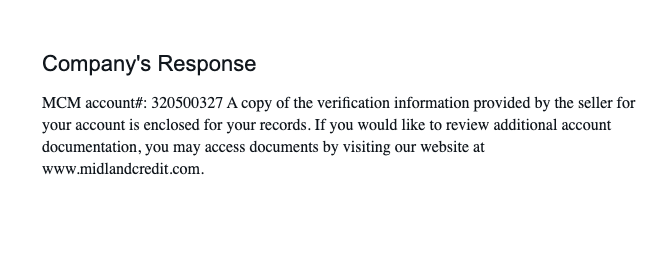
Reading the response carefully is half the work. Junk-debt buyers send canned letters claiming they validated when they did nothing of the kind. Spotting the new violation buried inside the response is what separates an actual file from a paper trail.
This is what staying on the file looks like. The cost of doing this is reading every response twice and writing the next demand, not filing once and hoping.
Questions, plainly answered
If your question isn’t here, text Kali at (352) 586-3704. She answers personally.
Yes. Kali Credit Co backs every engagement with a 90-day money-back guarantee. If our team deletes nothing from your reports within 90 days, you get every dollar back, on any plan. We cannot promise a specific score or a guaranteed result, that would violate federal law, but we can guarantee you do not pay for work that produced no deletions.
$499 flat as a one-time payment. No monthly fee, no per-deletion pricing. For prospects who prefer to split it, the firm offers $179 per month for three months ($537 total) or $99 per month for six months ($594 total). Both plans auto-end on their own. There is no recurring subscription beyond the planned cycle.
The first round of deletions on a credit report typically lands inside the first 30 days. This is faster than most credit-repair firms because demand letters and federal complaints are filed in week one. Both channels carry statutory response windows that are shorter than a single bureau dispute cycle.
No. The firm is headquartered in Dunnellon, Florida, but our team works files for consumers in all 50 states. The federal-pressure methodology (FCRA, FDCPA, CROA, and complaints to the federal regulator) applies everywhere. Statute-of-limitations and state consumer-protection work is routed to your own state of residence.
A demand letter is a certified-mail debt-validation letter sent directly to a creditor or debt collector under FDCPA Section 809. The recipient must produce a signed contract, a chain of assignment, and an itemized accounting of the debt, or they stop collecting and stop reporting.
Most junk-debt buyers cannot produce these records, which causes the account to be deleted from the credit report.
Yes. A law firm handling the same federal-grade correspondence would typically bill several thousand dollars in retainer and hourly fees. Kali Credit Co charges a flat $499 (or $537-$594 on a payment plan) and operates with the same persistence and back-and-forth correspondence a law firm would, without billing the hours.
No. Both payment plans (3 months at $179 or 6 months at $99) auto-end after the final scheduled invoice. There is no perpetual subscription. The $499 flat plan is a single one-time payment with no recurring charges.
Open the private intake on this page or text Kali at (352) 586-3704. The intake walks through four questions: your name, what is pulling your score down, what score would change your life, and the best number to reach you. Kali reads the file personally and reaches out within 24 hours.
Begin a private intake
If your situation isn’t one we can move, we’ll tell you in the first call. No retainer until we’ve read your file and named the mechanism that fits it.
No upfront retainer. We read your full file free and tell you honestly what is workable before you pay a dollar. We follow the FCRA and FDCPA to the letter, and we never promise a specific score or a guaranteed result.